Introduction
MRI for diagnosing muscle and bone injuries is a crucial tool in modern medicine. MRI stands for Magnetic Resonance Imaging. It uses strong magnets and radio waves to create clear pictures of the inside of your body. Because of its accuracy, MRI helps doctors find the exact cause of pain or injury. This makes it easier to plan the best treatment. In many cases, MRI scans are the best imaging choice for muscle tears, sports injuries, and bone problems.
What is MRI?
MRI is a safe and painless scan. It does not use harmful radiation. Instead, it uses a strong magnet and radio waves. These create detailed images of muscles, bones, and other tissues. As a result, doctors can see problems that may not show up on X-rays or CT scans. MRI is often used when other tests do not give enough information.
How MRI Works for Muscle and Bone Injuries
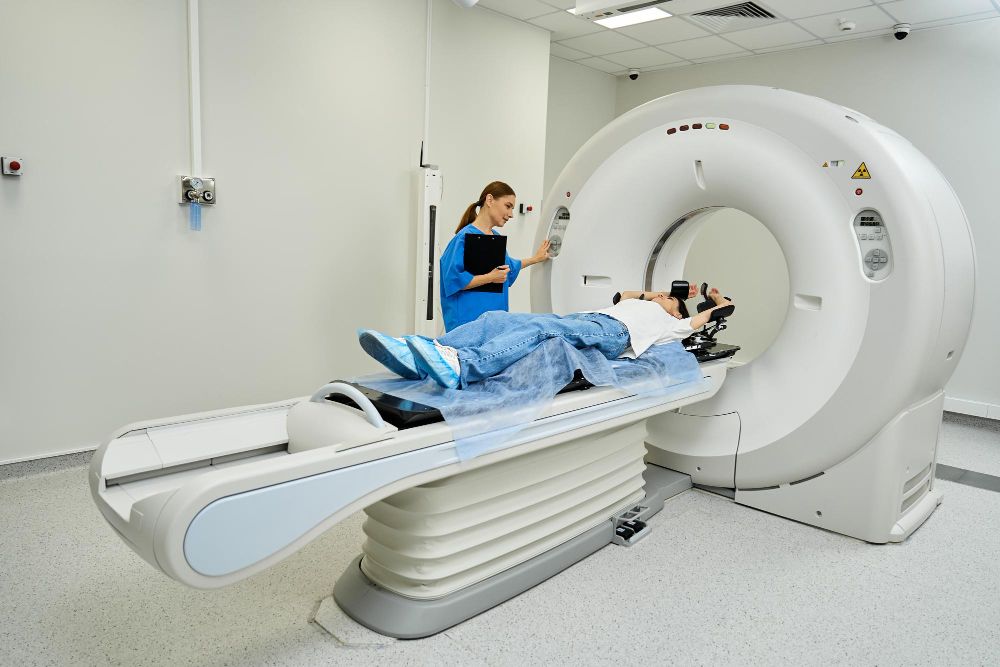
During an MRI scan, you lie still inside a large tube. The machine takes pictures of your body from many angles. Because MRI can show soft tissues clearly, it is very useful for finding muscle tears, ligament injuries, and bone bruises. For example, if you have a sports injury, an MRI scan for sports injuries can help your doctor see the exact damage. This helps guide your treatment plan.
Key Benefits of MRI in Diagnosis
MRI offers many benefits for diagnosing muscle and bone injuries. Some of the main advantages include:
Because of these benefits, doctors often choose MRI when they need a clear picture of an injury.
Common Muscle and Bone Injuries Detected by MRI
MRI scans can help find many types of injuries, including:
For example, athletes often need an MRI scan for sports injuries to check for hidden damage.
MRI vs. Other Imaging Techniques (X-ray, CT)
Although X-rays and CT scans are useful, MRI offers some clear advantages. For instance, X-rays are best for seeing bones but not soft tissues. CT scans use radiation and give less detail for muscles and ligaments. In contrast, MRI provides detailed images of both bones and soft tissues without radiation. Therefore, doctors often prefer MRI for complex injuries.
What to Expect During an MRI Scan
Before your MRI, you may need to remove metal objects. The scan itself is painless. You will lie on a table that slides into the MRI machine. The machine may make loud noises, but you can wear earplugs. Most scans take 30 to 60 minutes. Although you must stay still, you can talk to the staff if you feel nervous. After the scan, you can return to normal activities right away.
Safety and Risks of MRI
MRI is very safe for most people. It does not use radiation, so there is no risk from exposure. However, people with certain implants, like pacemakers, may not be able to have an MRI. Always tell your doctor about any metal in your body. Rarely, some people may feel claustrophobic inside the machine. If you are worried, let your doctor know before the scan.
Tips for Patients: Preparing for an MRI
To get ready for your MRI scan, follow these tips:
Because preparation helps the scan go smoothly, always follow your doctor’s advice.
Conclusion
In summary, MRI for diagnosing muscle and bone injuries is a safe and powerful tool. It helps doctors find the exact cause of pain or injury. As a result, you get the right treatment quickly. For the best advice on muscle and bone injury diagnosis, consult a radiology specialist at Radiant Diagnostic Centre.